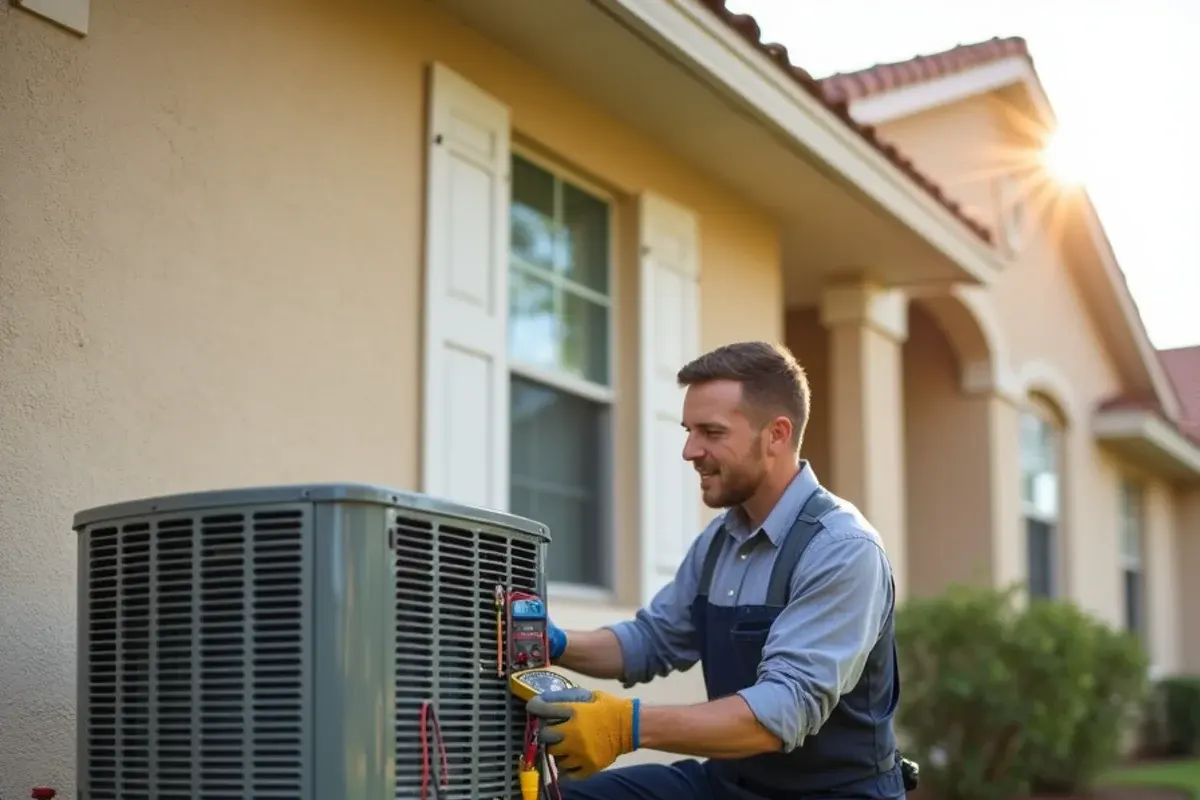
AC replacement cost in Central Florida is set mostly by six things: the system's size in tons, its SEER2 efficiency tier, whether the compressor is single-stage, two-stage or variable speed, the refrigerant it uses, the condition of your ducts and the installation work around the equipment (air handler, line set, electrical, permit and disposal).
A written quote should break out each one. We do not publish prices, because they depend on the house and change with equipment supply. What we can do is explain what each line on a quote means, so you can compare two quotes on equal terms.
What a full replacement includes
In most Central Florida homes, replacement means both halves of a split heat pump or AC: the outdoor condenser and the indoor air handler with its coil. Around those two boxes sits a list of work that varies from house to house.
- Removal and disposal of the old equipment, with refrigerant recovered by an EPA Section 608 certified technician.
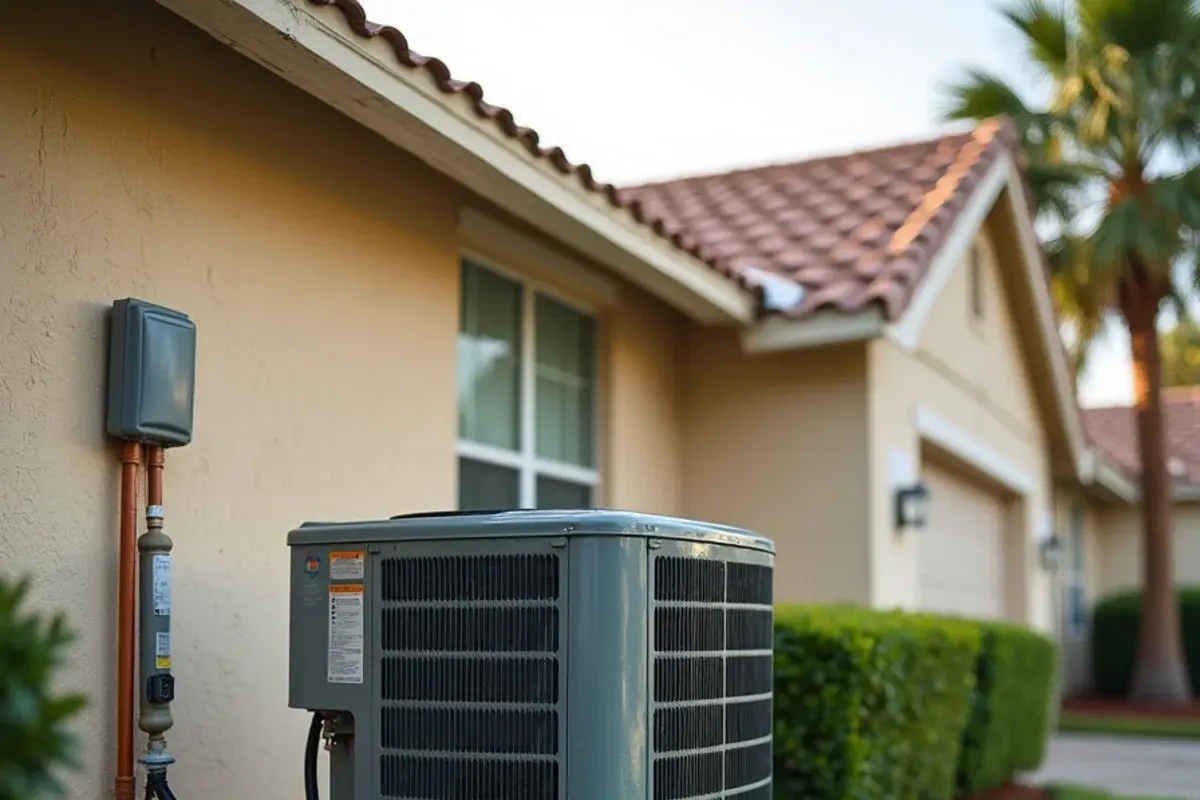
- A new pad or stand, with tie-downs that anchor the outdoor unit against hurricane winds.
- The line set: reused and flushed, or replaced.
- The condensate drain, float switch and secondary drain pan.
- Electrical: disconnect, whip and breaker sized to the new equipment.
- Plenum and duct connections at the air handler.
- A thermostat compatible with the new system.
- The mechanical permit and the inspection.
System size: tonnage and the load calculation
Larger systems cost more, so size is the first big variable. A ton of cooling is 12,000 Btu/h, and most Central Florida homes run somewhere between two and five tons. The right size comes from a Manual J load calculation that accounts for insulation, windows, orientation, ceiling height and duct location, not from square footage alone.
Oversizing is common and costly twice: the larger unit costs more up front, then short-cycles, cooling the air before it can pull out the humidity. Many builder systems from the 2000s were oversized. A load calculation sometimes shows the replacement can be smaller than the original.
SEER2 tier and compressor staging
SEER2 measures seasonal cooling efficiency under the testing rules that took effect January 1, 2023. Florida is in the Southeast region, which has the strictest minimums for air conditioners.
| Equipment | Minimum |
|---|---|
| Split AC under 45,000 Btu/h | 14.3 SEER2 |
| Split AC 45,000 Btu/h and larger | 13.8 SEER2 |
| Split heat pump | 14.3 SEER2 and 7.5 HSPF2 |
Moving above the minimum raises the equipment price in steps. Higher tiers usually come with a change in how the compressor runs:
- Single-stage: full speed or off. The least expensive and the least effective at humidity control.
- Two-stage: a low stage that handles most days, full output for the hottest afternoons. Longer, gentler cycles remove more moisture.
- Variable speed (inverter): adjusts output in small steps. The most expensive tier, and the best at holding steady temperature and humidity.
In a humid climate, a two-stage system often makes more practical difference to comfort than chasing the highest SEER2 number. Whether a higher tier pays back depends on how many hours the system runs and how long you will stay in the house.
The R-454B refrigerant change and what it does to quotes
Under the EPA's AIM Act technology transitions rule, new residential split systems manufactured since January 1, 2025 must use a refrigerant with a global warming potential below 700. In practice that means R-454B or R-32, both classed as A2L, which is mildly flammable. A 2026 EPA amendment allows R-410A split equipment made before 2025 to be installed while existing stock lasts, so some quotes may still offer it, but that inventory is shrinking.
What it means for a replacement quote:
- An R-454B or R-32 condenser must be matched with an indoor coil rated for that refrigerant, which makes a full system replacement the norm.
- Many A2L air handlers include a refrigerant leak sensor and mitigation controls that are wired in during installation.
- The contractor will decide whether the existing line set can be reused or should be replaced, based on its size, condition and the manufacturer's instructions.
- If a quote offers R-410A equipment, ask its manufacture date and how future refrigerant service will be handled.
Ducts, electrical and the house you are putting it in
The equipment is only as good as the air path. Attic flex duct from the 2000s is often sagging, crushed or poorly sealed, and a new system connected to it will underdeliver. A contractor may recommend sealing with mastic, replacing damaged runs or adding a return. That is real cost, but it is often what makes the new system perform. Our page on air duct repair and replacement covers what those options involve.
Access and the home's age also move the price. An attic air handler in a two-story home takes more labor to remove and replace than one in a garage closet. Older houses can need electrical updates, and downtown homes that were retrofitted with ductwork decades ago raise their own questions. We see both ends of that range in Winter Garden, from historic houses near Plant Street to newer Horizon West subdivisions.
How to read and compare written quotes
A replacement quote should always be in writing, and the price should be stated before any work starts. When comparing two, line them up item by item:
- Outdoor and indoor model numbers, so you can confirm they are a matched pair and look up the certified SEER2 rating.
- Tonnage, and whether a load calculation was done or the old size was copied.
- Refrigerant type and the equipment's manufacture date if it is R-410A.
- Line set: reused, flushed or replaced.
- Duct work included, and what exactly it covers.
- Electrical, drain, pad, tie-downs and thermostat.
- Permit, inspection, refrigerant recovery and disposal.
- The manufacturer's equipment warranty terms and any registration it requires.
From the field: where two quotes quietly differ
Put two Central Florida replacement quotes side by side and the equipment line often looks the same. The differences that matter in five years usually sit in the smaller lines, or are missing from them entirely.
- The line set. Reusing the copper lines saves money when they are the right size and in good shape. Moving to an A2L refrigerant from an older system raises the stakes; ask whether the lines will be flushed and pressure-tested or replaced.
- The charge. Systems ship with a factory charge sized for a standard line length. On a long run to an attic air handler, the charge should be adjusted and weighed in, and the startup readings recorded.
- Leak detection on A2L systems. Many new R-454B air handlers include a refrigerant sensor that must be wired and tested. Check that the quote covers it.
- The pad, disconnect and surge protection. A sinking pad or a corroded disconnect from 2005 is cheaper to replace during the change-out than as a separate call later.
- The drain and safety switch. A new secondary pan and float switch under an attic unit is a small line that prevents a stained ceiling.
- Startup documentation. Ask for the measured charge, static pressure and temperature split in writing. It is your proof the system was set up correctly, and the baseline for every future service.
If a quote is far lower than the rest, look for which of these lines is missing. And if the old system turns out to have years left, a straightforward AC repair may be the better spend this year.
Get a written replacement quote: call (321) 478-0693
Call (321) 478-0693, answered 24/7, to have an HVAC contractor look at your home and put a replacement quote in writing. The quote comes before any work starts, and you can see more about how an AC replacement in Central Florida is sized and installed. Every HVAC contractor we send is licensed and insured in Florida.
Frequently asked questions
Is R-454B safe to have in my home?
R-454B is classed as A2L, meaning it has low toxicity and is mildly flammable under specific conditions. Equipment using it is built and tested to safety standards that include charge limits and, in many air handlers, a leak sensor that turns on the blower to disperse refrigerant. Installed by a licensed contractor to the manufacturer's instructions, it is designed for residential use.
Can I still buy an R-410A system?
Possibly, while existing stock lasts. A 2026 EPA amendment lets R-410A split equipment manufactured before January 1, 2025 be installed without the earlier year-end 2025 deadline. Manufacturers no longer build new R-410A systems, so ask how long the contractor expects service refrigerant to remain easy to get before choosing one.
Why are two quotes for the same house so different?
They are often quoting different jobs. One may include a new line set, duct sealing and a two-stage system, the other a single-stage system on reused lines with nothing done to the ducts. Compare the model numbers, the tonnage, whether a load calculation was done and the list of included work before comparing the totals.
Does a higher SEER2 rating make sense in Central Florida?
Often more than in cooler states, because systems here run most of the year. Whether a step up pays back depends on how many hours your system runs, your electric rate and how long you plan to stay. For many households, the bigger comfort gain comes from a two-stage or variable-speed compressor rather than from the SEER2 number itself.
Serving Winter Garden, FL, Clermont and the rest of South Lake County.