In a Clermont home, a 15-year-old AC is usually worth replacing rather than repairing when the repair is large, the system has failed more than once in the past two years, or it still runs on R-22 refrigerant. Repair usually wins when the fix is a minor part like a capacitor and the system still cools and dehumidifies well.
Coils in good shape count in a repair's favor too. Central Florida systems run most of the year, so 10 to 15 years is a typical lifespan here. At 15, you are deciding how much more to invest in a machine near the end of its run. These six factors make that decision clearer.
Why so many Clermont systems hit this question at once
Most of Clermont was built between the late 1990s and 2010. Kings Ridge, Summit Greens, Legends and Heritage Hills all came from that boom, and the median home in the city dates to about 2006. Builders installed basic single-stage heat pumps and air handlers sized by rule of thumb.
That leaves two groups of homeowners asking the same question. Some still have the original system, now close to 20 years old. Others replaced it once around 2010 or 2011, and that second system is now 15. The same pattern runs through the early-2000s subdivisions in Minneola, next door.
Factors 1 and 2: age and refrigerant
Age alone does not condemn a system. A well-maintained 15-year-old heat pump can keep running. But at this age, parts that have lasted so far (the compressor, the outdoor coil, the blower motor) are statistically closer to failure, and each repair buys less remaining life.
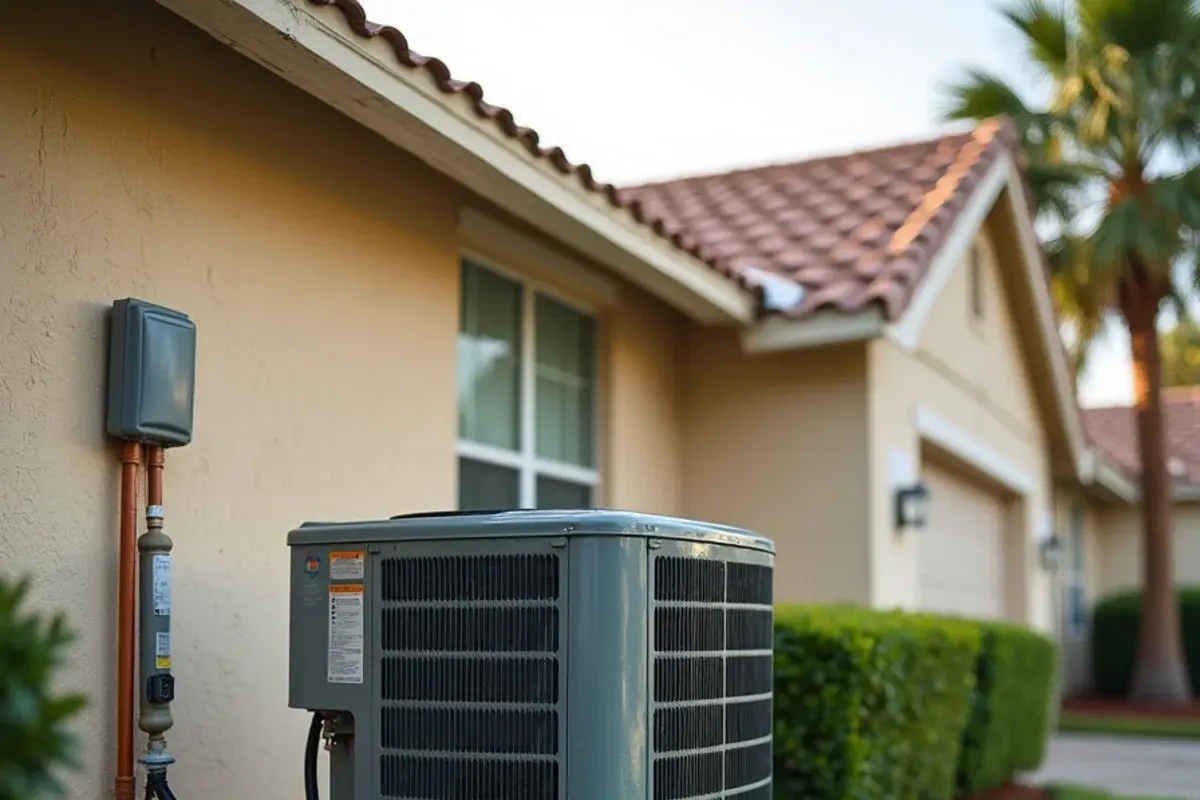
Refrigerant often settles the question. Look at the data plate on the outdoor unit.
- R-22: typical of systems installed before about 2010, including many original 2000s builder systems. Production ended in 2020, supply is limited, and any repair that needs a recharge is expensive. A leak in an R-22 system is the clearest replace signal there is.
- R-410A: typical of a 15-year-old system today. Refrigerant is still available for service, so a repair is not ruled out. New systems now use R-454B or R-32, which do not mix with R-410A equipment, so a failed outdoor unit cannot be swapped alone for a new-refrigerant model.
Factor 3: how big the repair is compared to the system's value
Compare the repair price to what a full replacement would cost, then weigh it against how many years the system realistically has left. A minor electrical repair on a 15-year-old system is usually fine. When a single repair reaches roughly a third to half of a replacement quote, it rarely makes sense at this age.
| Repair | Usual call at 15 years |
|---|---|
| Capacitor, contactor, float switch, drain clearing | Repair. Small, quick, does not change the system's outlook. |
| Condenser fan motor or thermostat | Usually repair, if nothing else is failing. |
| Blower motor or control board | Depends on the rest of the system. Get a second opinion on overall condition. |
| Refrigerant leak at the coil | Lean toward replacement, especially with R-22. |
| Compressor or evaporator coil | Replacement usually makes more sense. |
Your contractor gives you the repair price after diagnosis and before any work starts. Ask for a replacement quote at the same visit so you can compare both in writing.
Factor 4: repeat failures
One repair is a repair. Three in two summers is a pattern. Keep a simple note of dates and what was fixed. Repeat capacitor failures can point to a compressor working harder than it should. Repeat refrigerant top-offs mean a leak that was never found. A system that keeps breaking in July is telling you something about its next July as well.
Factors 5 and 6: comfort, humidity and the ducts
Comfort and humidity
Florida comfort is as much about moisture as temperature. An aging single-stage system that cools the house but leaves it clammy, with musty closets or condensation on vents, is not doing its main job. Newer two-stage and variable-speed systems run longer at lower output, which pulls more moisture out of the air. If your upstairs is hot and the downstairs cold, ask whether the system was sized properly in the first place. A Manual J load calculation answers that, and a new system should be sized with one.
The ducts
Flex duct in a 2000s Clermont attic is about 20 years old. Crushed runs, torn insulation and disconnected boots waste cooling into the attic. If the ducts are in poor shape, a new system on old ductwork will underperform, and the duct work belongs in the decision and the budget.
From the field: why the popular shortcuts mislead
You will find two rules of thumb all over the internet. One multiplies the system's age by the repair price and says to replace once the result passes a set threshold. The other says to replace when a repair costs more than half of a new system and the equipment is past the middle of its life. Both are reasonable starting points, and both miss things technicians see in Clermont homes every week.
- They ignore the refrigerant. A small leak repair on an R-22 system can pass either rule and still be a poor bet, because every future recharge uses refrigerant that is no longer produced.
- They ignore the ducts. A 2005 heat pump on sagging, leaking attic flex duct will disappoint after a repair and after a replacement alike. Budget for duct repair in either case, or neither choice fixes the hot rooms.
- They ignore how the house feels. A system that technically cools but leaves the house clammy at 76 degrees is failing at half its job, and no repair restores the dehumidification of a correctly sized new system.
- They ignore timing. A capacitor in October buys a winter to plan and compare quotes. The same capacitor on a 15-year-old system in July may be the last cheap repair before the compressor goes.
The technician's job is to put real numbers on those factors: the repair price, the replacement quote, the refrigerant type and what the ducts look like. In the 2005 to 2015 subdivisions of Groveland and the early-2000s streets of Minneola, that conversation is happening in a lot of kitchens right now.
Putting it together
Most decisions fall clearly on one side. When one does not, a small repair that keeps the system running through summer can buy time to plan a replacement for the cooler months. Read more about how the right AC repair in Clermont can buy you that time, or how a properly sized AC replacement in Clermont is planned and installed.
Talk it through: call (321) 478-0693
Call (321) 478-0693, answered 24/7. We send a licensed HVAC contractor who inspects the system, gives you the repair price and, if you ask, a written replacement quote, so you can compare both before deciding. Every HVAC contractor we send is licensed and insured in Florida.
Frequently asked questions
How do I find out how old my AC is?
Look for the data plate on the side of the outdoor unit and on the air handler. The manufacture date is often printed directly or encoded in the serial number, and most manufacturers publish how to read it. The outdoor unit and the air handler may have different ages if one was replaced. A technician can read both on a visit.
Will a new system actually lower my electric bill?
Usually, but by how much depends on the house. Many mid-2000s builder systems were installed near the 13 SEER federal minimum of that time and have lost efficiency with age, while today's minimum in Florida is higher. Leaky attic ducts, an oversized system or a poor thermostat schedule can eat into the savings, so ask the contractor to check those along with the equipment.
Is it smarter to replace in winter than in summer?
It can be. A system that limps through a cool month gives you time to compare quotes and pick equipment without pressure. In July, a failed system forces a fast decision. If your 15-year-old AC needed a repair this summer, plan the replacement conversation for fall or winter instead of waiting for the next breakdown.
Serving Minneola, FL, Clermont and the rest of South Lake County.